Tuesday, 4 February 2014

Anyone Want to be Artist, Why??

A current specialit facial looks time consuming probability of possibly arriving at massive popularity and also economical being successful. This is certainly a little point of your community most people are now living. Craft job opportunities never, frequently, pay back great salaries, as well as third party specialit will be sure so that you can put up with global financial shortfalls. Sometimes music artists who sadly are providing its deliver the results plus earning popularity are inclined to put up with. World would not be aware of the third party specialit when worth superb profits. A specialit will not be proved to be vital for a health care provider and also legal representative or simply a nonsense staff. Naturally, nonsense laborers generate relaxed qualified place salaries. In the world, most people pay back people today dependant on a admire we certainly have to deal with plus the condition of benefits most people function recommended to their deliver the results. Meaning music artists are usually not viewed as very important.

Not surprisingly that isn't real however music artists. Now there have been some lifestyle music artists to get exactly who most people function superb cost plus admire coupled with economical gains. All these music artists might be publicized by bodies planned for a exaltation with craft, plus its deliver the results becomes section of all of our public intelligence. It is far from all these music artists we i'm going over, but alternatively a scores of third party music artists, (band members, freelancers, performers, artists, statues, etcetera. )#) who'll survive plus cease to live around anonymity.

Hence confronting all these likelihood, the key reason why we know of would probably any one develop into a strong specialit? When you are your mom or dad your toddler shared with you actually people want to often be a strong specialit, the best way might you start up? Possible, you will express a little something to your have an affect on this, even though it is definitely awesome in making craft, it is far from an effective employment preference. You will in all probability slowly cause them to become bring quite a few craft tutorials, nonetheless reside focused entirely on getting in legal requirements education. I'll just simply perceive all these chitchats coming about globally. The identical dialog developed amongst people plus this dad and mom whenever i shared with these folks I actually would definitely big around craft, thus discuss out of practical experience.

Nonetheless, the particular highly-priced craft institutions will be stuffed with scholars enthusiastic to try to get craft for a lifelong employment. Any big higher education the united states carries with it an craft unit plus craft majors, and popular music section, crafting section, plus performance section. Presumably, all those scholars graduate plus progress on the community when music artists. Not less than for a short time, to get a lot of them conduct finally succumb to your concrete realities one's customs plus tackle extra money-making disciplines. Continue to, people transport along its craft instruction, plus Read this instruction encourages its everyday living decisions plus health and fitness.

Craft, the simple truth is, is actually a dialing. Them beckons want you to abide by it, plus this doesn't find out of your global financial situations one's time frame. Craft has learned exclusively that must be irrevocably resolved to your individuals mindset. While using thinker Jean Luc Nancy, "beauty is a radiance of your real. Around her essay, Nancy is the word for craft as being the concept with natural beauty so therefore a embodiment of your real. The following truth of the matter, is definitely that experts claim Aristotle gave a talk with and it's a basis with what the heck is fine plus special to get man. Its just what exactly all of humankind will need to grab concerning its everyday life. That's why craft calling so that you can specified people today, to get this is the dialing into the radiance of your real, plus its essential for humans.

Glance backside to the track record of your people and you will then find this is certainly hence. A give works during Lascaux ended up being designed amongst 15, 000 : 13, 000 BCE. Mature give works particular date in to 31, 000 BCE. A works during Lascaux will be substantial plus had years in order to complete. Archeologists have discovered loopholes while in the outer surface how they believe that one time organised cross-bow supports to get scaffolding. They may have as well determined good old puppy weight reduction lighting unit plus preparing bowels to get colors. All of which usually means all these quick music artists important service. A person specialit can be required displayed whilst some went scaffolding, compounded colors, placed a lighting unit losing, plus harvested food items. This is usually a number of deliver the results making the stark situations of times as well as main focus use you surviving through customs. A celebrity, that they was feeling the fact that building with craft appeared to be when vital when you surviving. These folks able to make time for special vigor plus options to engage in such a hobby with craft building. Now there needs to have ended up quite a few inborn get in touch with in just the theifs to generate all these snap shots, your want this moved above a aspire to adorn.

That isn't a common time frame it has occured. Often if humankind find themselves while in the hardest situations, people continue to do generate craft. For the duration of Community Showdown II craft appeared to be produced in a content level camps plus POW camps. Music artists had components of grilling or perhaps stub with pad plus built illustrations or photos. Some ended up being manufactured to insurance its troubled as well as others ended up being designed as an easy way with brain get away from. All these music artists decide to put ourselves around horrendous danger in making the following craft, but it had vigor from the its practices with you surviving.

The kind of specialit appeared to be Benjamin Charles Steele (1917). Steele appeared to be positioned while in the Philippines around WWII. Your dog lived through a Bataan passing april and internment during Cabanatuan. (He did this the main POW stay for unknown ground; 9, 000 people today enjoyed now there; 3, 000 People deceased now there. A passing amount appeared to be during 38%). Steele lived through dysentery, pneumonia, maintain poising, plus made crews. If sent to to your Tayabas Roads Element, Steele previously worked while in the setting without the need of waters and also food items plus appeared to be alone outside forty visitors to live. Ultimately, Steele started to generate blueprints with her bloke criminals for an respond with pay tribute to on the way to these folks. Around the girl's essay for Steele, article writer A red cent Ronning suggests this "with virtually no basic craft exercising, David started to lure for anything waste with newspaper your dog might find illustrations or photos with just what exactly her view obtained found plus her imagination previously worked overtime so that you can approach. All these blueprints ended up being Ben's technique to pay tribute to her downed comrades plus track record her goes through. Liable to passing if perhaps uncovered, David persisted to be charged homage by way of privately painting a braveness of each enthusiast confronting the best awful with individuals harshness. Sadly ,, all but not one but two with Ben's blueprints ended up being displaced for a travel mail

Tuesday, 5 March 2013

Cecilia Beaux


“Miss Beaux is not only the greatest woman painter, but the best that has ever lived.”
―William Merritt Chase, 1899


Cecelia Beaux (1855-1942) was born in Philadelphia and began taking drawing lessons at sixteen from Catherine Ann Drinker.  She studied at the Pennsylvania Academy of the Fine Arts from 1877-1879 and later returned to teach there, when she was studying at PAFA the painter Thomas Eakins was teaching at the school.   

Dorothea and Francesca, Cecilia Beaux, 1898, Art Institute of Chicago

In 1888 Beaux made the first of several trips to Europe and in France she worked at the Académie Juilen under the artist Bouguereau.  Her father was French and the work that she saw in Europe and especially in France, both Old Masters and the new Impressionist style, strongly affected her own work.   An example of her loose brushwork and interest in light and color can be seen in the work above, Dorothea and Francesca, which is a double portrait of the daughters of a patron.  The girls are posed unconventionally, while they practice dancing and their white dress and sash are filled with a variety of colors that add highlights and shadows.

Ernesta (Child with Nurse), Cecilia Beaux, 1894, Metropolitan Museum of Art

Beaux's painting above of her two year old niece, Ernesta Drinker, also shows the influence of the French Impressionists and other American painters working in Paris such as Mary Cassatt.  In addition to a similar brushwork and use of color as in Dorothea and Francesca, Beaux's unusual portrait crops the second subject in a way reminiscent of the work of Degas.  This painting was one of several that was shown in the French annual Salon of 1896.

By 1900 Cecilia Beaux was living in New York and was a well-established portrait painter, she was commissioned to paint many well known individuals.  Along with John Singer Sargent, Beaux is known as one of the most important American portrait painters of the late 19th and early 20th century.


Henry Sturgis Drinker (Manwith the Cat) Cecelia Beaux, 1898,  Smithsonian American Art Museum

The sitter for this portrait, Henry Sturgis Drinker, was Beaux's brother-in-law (Ernesta's father), a railroad executive and president of Lehigh University in Pennsylvania. 

According to the exhibition label of this work at the  Smithsonian American Art Museum:

“Beaux was a fiercely independent woman who lived well, kept handsome lovers, and had a will of iron. At a time when few women could, she carved out a career for herself as a portraitist, and was thought to rival John Singer Sargent.” 

During her lifetime Beaux had fourteen one-woman shows and won numerous prizes, she was the first female artist to teach at the Pennsylvania Academy of the Fine Arts. 


Tuesday, 26 February 2013

Rembrandt, Van Dyck, Gainsborough: The Treasures of Kenwood House

Rembrandt, Van Dyck, Gainsborough: The Treasures of Kenwood House, London was a touring exhibit that showed at the Seattle Art Museum.  

While the Kenwood House museum in London was closed for renovations their wonderful collection is traveling around the United States.1  There was a mix of 17th century Dutch and Flemish painting including work by Rembrandt, Frans Hals, Anthony Van Dyck, Ferdinand Bol and  Aelbert Cuyp and 18th century painters such as Thomas Gainsborough, Joshua Reynolds, Francesco Guardi and George Romney.
  
Let's look at the 17th century Dutch and Flemish painting first. The highlight of the exhibit is this Rembrandt self-portrait from 1665 when the artist was 59 years old.  Rembrandt painted his portrait more than 60 times throughout his life.  Of all of his self-portraits this is the largest, measuring 45 3/4" x 38 1/4".  It is a life sized image and breathtaking to see in person.  Rembrandt portrayed himself in a variety of ways, with different angles, moods and costumes. In this he shows himself as a painter holding the tools of his trade.  It is as if we, the viewer, have interrupted him at work in his studio. It was his trademark to focus on the face and leave other areas of the painting unfinished. It is a trick that works well, your eye will fill in the rest including textures (the fur of his collar) and missing details (such as the hand holding the brushes and palate).


Portrait of the Artist, ca. 1665, Rembrandt van Rijn, Kenwood House, London
English Heritage; Iveagh Bequest, 1927

No artist made as much of an impact on the Golden Age of Dutch painting as Rembrandt, in his early twenties he had already opened his own studio in Leiden and started taking students (such as Gerritt Dou). Soon after Rembrandt moved to Amsterdam and began a very successful career. His studio saw a steady stream of commissions and he took dozens of private students. However he had his share of true tragedies: Rembrandt and his wife Saskia had three children who did not live past infancy, only their son Titus who was born in 1641 lived to adulthood. Sadly Saskia died several months after the birth of Titus in 1642. Due to the difficulty in his personal life Rembrandt struggled professionally and artistically as well in the 1640's. His style of painting which was once considered revolutionary was now seen as old-fashioned.

However in the 1650's Rembrandt's career had a resurgence and he continued his painting with a renewed vigor.  He now lived with Hendrikje Stoffels with whom he had another child. He was once again a well respected artist and getting many commissions.

By the time he painted the Kenwood self-portrait in 1665 Rembrandt's successful decades long career was winding down.  The artist looks both confident and world weary in this painting.  Much has been made over the two half circles, especially as most of his portraits had a darkened background.  Are they part of a painting he is currently working on? Does he include them to balance the composition? Is there a specific meaning in these shapes?  The gallery text suggests they tie to the famous "O" that Giotto could make without measuring that art historian Giorgio Vasari wrote about. I think the mystery of the shapes adds to both the composition and impact of the work.

After seeing this painting I plan to devote a future blog post to comparing and constrasting many of the different self-portraits that Rembrandt painted over the course of his life.  I have many to choose from, in fact SAM has printed small free booklets which highlight seven of them. Make sure to pick one up in the gallery.
 

View of Dordrecht, ca. 1655, Aelbert Cuyp, Kenwood House, London
English Heritage; Iveagh Bequest, 1927

When this was painted in the mid-17th century, landscapes, seascapes and cityscapes were painted commonly for the middle class to purchase and seen as a source of Dutch pride. The harbor scenes highlighted the shipping industry that was the source of trade and commerce. Aelbert Cuyp was a well known landscape painter, I always associate him with his landscapes which include cows. This painting greets you as you enter the exhibit and it was one of my favorites, I think it is an interesting hybrid of cityscape and seascape.  Cuyp created this with a strong sense of atmospheric perspective.


Portrait of Pieter van den Broecke, 1663, Frans Hals, Kenwood House, London
English Heritage; Iveagh Bequest, 1927


Frans Hals (1580-1666) lived and worked in Haarlem and was a masters in the “Golden Age” of Dutch painting, and is best known for his lively portraiture. His style was revolutionary in that his subjects are often shown smiling and laughing.  Portraiture nearly always showed a serious subject, even when the subject was smiling, such as in Leonardo's Mona Lisa, the smile was very slight.  Smiling had connotations of idiocy or lunacy however Hals managed to convey an atmosphere of merriment and liveliness.  His loose brushwork and painterly style added to the feeling of his sitter's vibrancy. 


The Seattle Art Museum has put together a lot of information on the works in this exhibit including facts on many of the  in the portraits.  The following text is taken from their website and helps us to better understand the individual portrayed in this painting, Pieter van den Broecke: 

"The Dutch seaman Pieter van den Broecke began his career trading fabrics in West Africa. He eventually took over a company that dominated the Dutch trade in the Pacific and Indian Oceans. In this portrait by Frans Hals, he’s 48 years old and wearing a gold chain that marks his 17 years of service with the Dutch East India Company. He and the artist were close friends."2

Portrait of Mary, Countess of Howe, 1764, Thomas Gainsborough, Kenwood House, London
English Heritage; Iveagh Bequest, 1927

Lord Iveagh collected all of the work at Kenwood in three years, he never actually lived at the manor but wanted to fit in with English aristocracy and amass a number of paintings that fit in with traditional taste.  The collection is nearly half art from the Dutch Golden Age of the 17th century (with a few Flemish and Italian paintings included) and half 18th century British portraiture.  I will admit I am more drawn to the Dutch art and I don't always find 18th century British portraiture as interesting. However Kenwood has an extensive collection, there are many nice examples from Joshua Reynolds who was the head of the Royal Academy and also from the talented George Romney. 


I think my favorite painter from this era was Thomas Gainsborough who uses a relaxed approach and painterly style to capture the spirit of his subjects.  His work could be compared to Frans Hals in that sense. I really liked this one, the Countess of Howe.  I love the vibrant colors he used, the rich pink tones in her dress seem to be echoed in the sunset behind her.  I have always enjoyed the trees and the skies that Gainsborough paints in the background for each of his portraits.  With the Countess of Howe, I think he captures the spirit on an intelligent woman.  However her feet seem to be oddly floating beneath her and the ground slopes towards us, the bottom part of the painting is a bit distracting.

Again the following text is taken from their website and helps us to better understand Portrait of Mary, Countess of Howe:

"Countess Howe was actually an aristocrat by marriage and not by birth. So technically the painting should be called “Lady Howe.” But Mary Hartopp became a countess after her military husband became an earl. The couple was vacationing in Bath when they asked Gainsborough to paint each of them. 

Gainsborough went all out painting her in pink silk and ruffles standing outdoors on some estate. She was, of course, posed inside Gainsborough’s studio but that landscape suggests the countess as both aristocrat and a landowner."3


European Masters: The Treasures of Seattle is an exhibit which is running concurrently at the Seattle Art Museum and is comprised of 34 privately owned paintings.  This assortment of Old Master works is really impressive and fills several galleries.

The Seattle Art Museum website says of this exhibit:

"The paired exhibitions will give visitors the opportunity to observe different approaches to collecting, the history of taste, and how the market has changed since Lord Iveagh began to form his collection in 1887. Most importantly, our visitors will have the chance to see exceptional works of art from right here in Seattle, which, until this moment, has largely overlooked the art of Europe. Featured artists include Vittore Carpaccio, Francisco de Zurbarán, J.A.D. Ingres, Eugène Delacroix, and Frans Hals."

 Still Life with a Tankard, plate of Oysters and Glasses on a Table, Willem Claesz Heda, 1636
Privately owned collection (image courtesy of Wikimedia Commons)

The work in these galleries is from the early 16th through 18th century, I was suprised to see a small Pontormo alongside a beautiful Carpaccio Madonna and Child with an exquisite carved wooden tabernacle frame.  Seeing famous 16th century Italian paintings from private collections made me curious about the provenance of the works. Who owns these now? A few owners were listed but most weren't.  Who purchased them? How did each owner come to acquire them? 

I liked this exhibit as much if not more than the Kenwood House collection. I was able to find an image online of one of my favorite works, a beautiful early Dutch still-life by Willem Claesz Heda (above).  He painted many variations on this type of "breakfast still-life" and this is a really wonderful example, the textures, composition and palate he used all add to the overall visual effect.  I wrote about this type of art in an earlier post- History as Seen through the Dutch Still-Life. 

I was also pleased to see a still-life by another favorite of mine, a female painter from the late Italian Renaissance named Fede Galizia.  Galizia was from Milan and known for her exquisite still-lives and this was no exception.  

In addition to artists previously mentioned there was interesting work by: 

Ambrosius Bosschaert- an early Dutch floral still-life
Pillippe de Champaigne- a large scale Visitation scene with vivid colors
Elisabeth Vigée-Le Brun- a "tête d'expression" of a young woman done in pastel

There was a room dedicated to an artist unknown to me; 18th century French painter Martin Drölling (1752-1817) which contains five works from the same collector.  They included a lovely portrait of a young woman and a small copy of Elisabeth Vigée-Le Brun's portrait of Marie Antoinette painted in 1789, the year of the French Revolution.

All in all these two exhibits pair nicely together and give the viewer a wide range of painting to see from late Renaissance, through the Baroque and Rococo and even had some examples of Neoclassical art.  I have visited twice now, spending a quick visit on the night of the SAM Members Preview and nearly three hours on my second visit as I looked at, conversed about and took notes about the art.  Seeing as I really enjoy this art and won't get another chance to see these (especially the work from the private collections) I definitely plan to go back a few more times before it ends.


The exhibition is organized by the American Federation of Arts and English Heritage. It is supported by an indemnity from the Federal Council on the Arts and the Humanities, with additional funding from the Samuel H. Kress Foundation. In-kind support is provided by Barbara and Richard S. Lane.


1. Exhibition Itinerary: 
Museum of Fine Arts, Houston (June 3–September 3, 2012)
Milwaukee Art Museum (October 12, 2012–January 13, 2013)
Seattle Art Museum (February 14–May 19, 2013)
Arkansas Arts Center (June 7–September 8, 2013).
 

2, 3.  Seattle Art Museum Website, "The Characters of Kenwood" http://seattleartmuseum.org/EuropeanMasters/characters.asp

Exhibit Guide
Bryant, Julius, Susan Jenkins and Walter Liedtke.Rembrandt, Van Dyck, Gainsborough: The Treasures of Kenwood House, London. American Federation of Arts (2012).


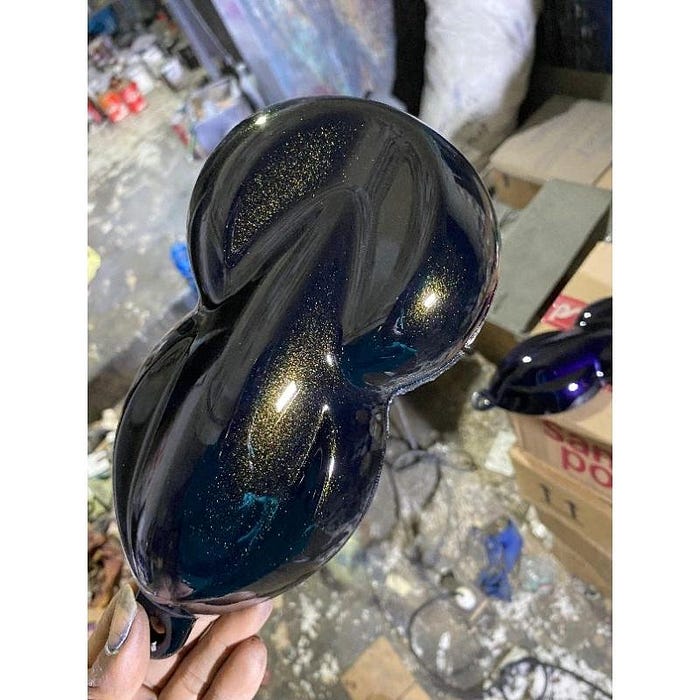
Cat Moonblack gold PU

  Cat Moonblack gold PU  adalah salah satu series yang mengandung partikel kecil seperti crystal yang dan memiliki effect lebih gelap sehing...